What is money?
Before we can understand digital money, we need to understand money itself. For centuries, humans traded goods and services directly in a system called bartering.
- Example: Imagine you’re a chicken farmer who needs bread. You’d have to find a baker who wants chickens. What if the baker doesn’t want chickens? This is the problem with bartering—it requires a “coincidence of wants.”
To solve this, societies invented money. Money has three main functions:
- A Medium of Exchange: Something everyone agrees to accept as payment.
- A Unit of Account: A way to price goods and services (e.g., this bread costs $2).
- A Store of Value: It should hold its value over time.
Over time, we’ve used many things as money: shells, salt, cattle, and eventually, precious metals like gold and silver. This led to the creation of coins. Then came paper money, which was initially a receipt for gold held in a vault. Today, most of the world uses fiat currency (like the US Dollar, Euro, or Japanese Yen). This is money that a government has declared to be legal tender, but it is not backed by a physical commodity. Its value comes from the trust we have in the government that issues it.
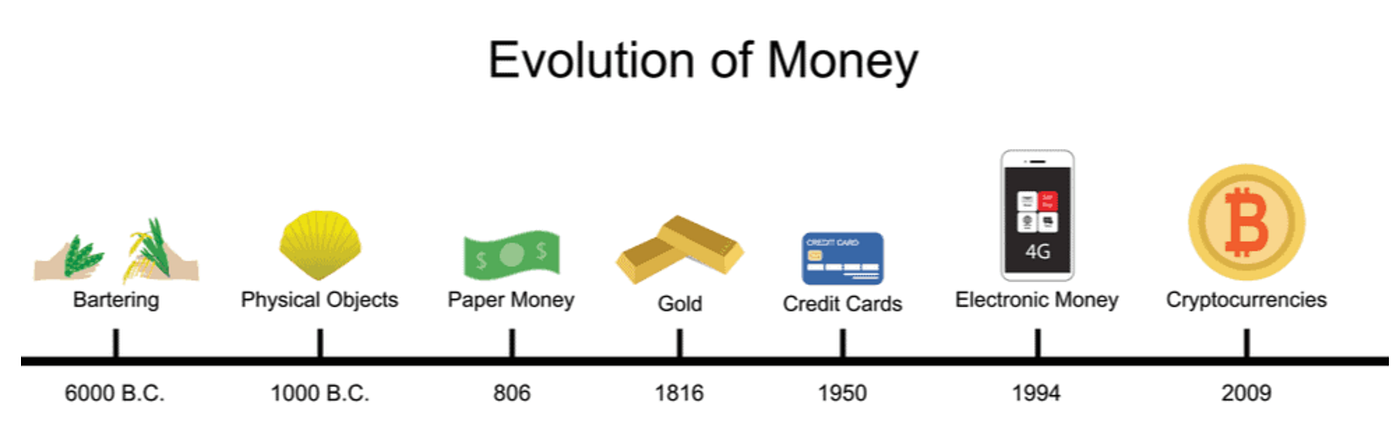
Watch the video above to understand the evolution of money.